
Plantation Shutter Materials: Basswood vs PVC vs Aluminium
Plantation Shutter Materials: Basswood vs PVC vs Aluminium
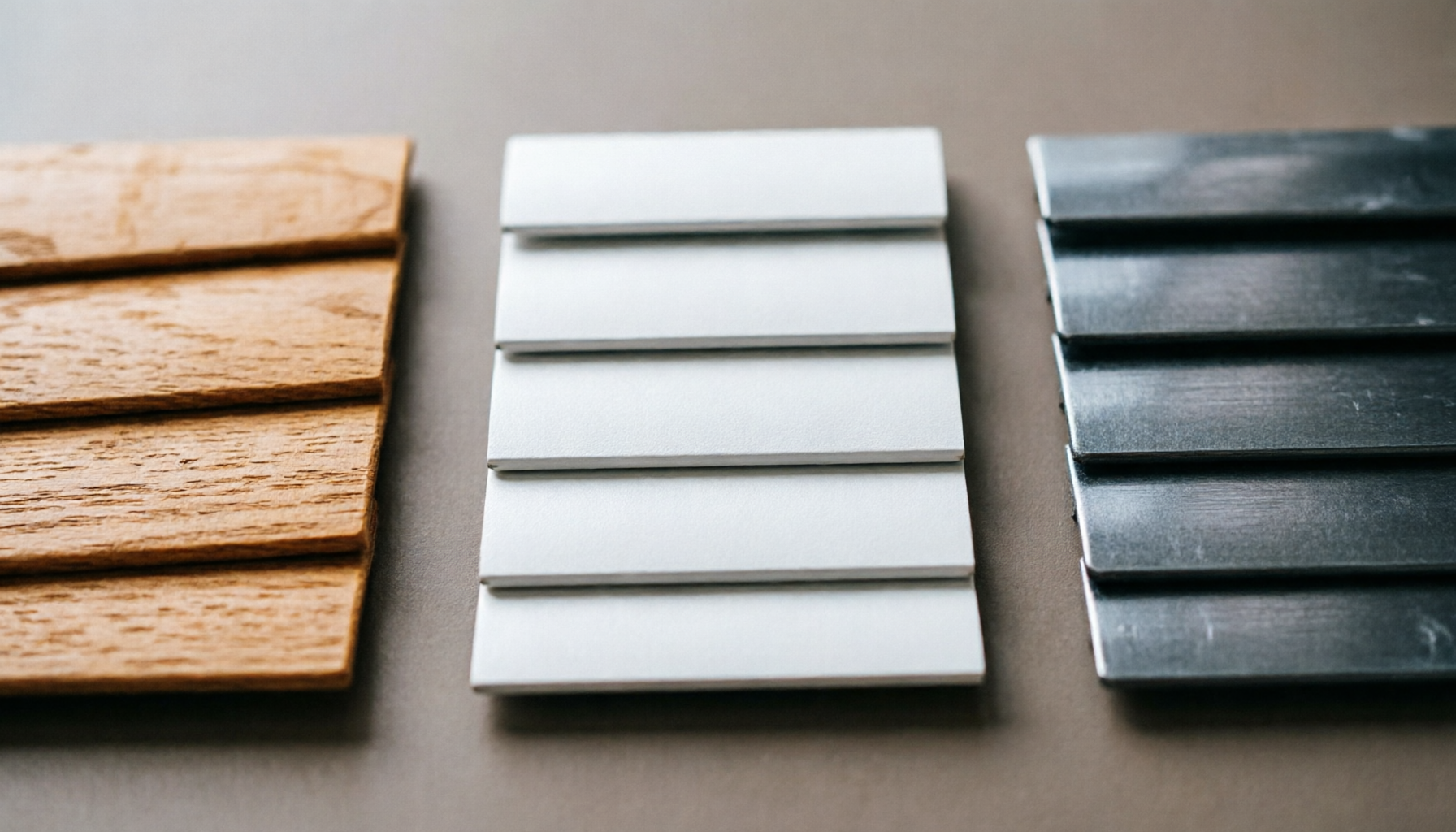
Short answer: basswood is the furniture-grade choice — light, stable, paintable, and the standard for living spaces where appearance leads. PVC is the moisture answer: it will not swell or warp, which makes it the safe specification for bathrooms, kitchens and humid climates, at a lower cost than wood. Aluminium is the specialist: it belongs outdoors, in coastal or storm exposure, or where security matters — not in a typical living room. The common specification error is choosing on appearance alone and ignoring the humidity and light exposure of the actual room, which is what determines whether the shutters still fit and operate in year three.
### Why the three materials differ
All three products look similar in a photograph — wide louvres in a framed panel. They differ in the properties that decide longevity in a specific room:
Weight and stability. Basswood (American linden/Tilia) is a genuinely light hardwood, and it is dimensionally stable for a wood — but it is still wood: in a humid room it absorbs moisture, and panels that fit in summer can bind or cup in a wet season. PVC does not absorb water at all, which is precisely why it is specified where steam and splashes are routine. Aluminium is the lightest of the three per square metre and does not change dimension with humidity at all — but it conducts heat and cold, and it feels and sounds different from timber.
Finish. Basswood takes paint and stain beautifully and can be repainted when interiors are redecorated — the reason it is the standard "furniture" shutter. PVC is coloured through or factory-finished; it cannot be re-stained like timber, and matching a future repaint is harder. Aluminium is powder-coated; the finish is durable and consistent but the colour choice is locked at manufacture.
Cost. PVC is typically the cheapest of the three; basswood sits above it; aluminium varies widely depending on whether it is a residential interior profile or a heavy external security profile. The spread between cheapest and most expensive in the same opening is often substantial — which is why the material decision should be made before budgeting, not after.
### The decision table
| |Basswood|PVC|Aluminium| | ---|---|---|---| | Moisture resistance|Low — swells/warps in humid rooms|High — waterproof, steam-safe|High — no water absorption| | Appearance|Furniture-grade, paintable/stainable|Factory finish; plastic look at close range on cheaper grades|Clean, consistent powder coat; industrial feel| | Weight|Light for a wood|Heavier than wood per panel|Lightest| | Repaint / refinish|Yes, repeatedly|No (factory colour)|No (powder coat)| | Relative cost|Middle|Lowest|Varies; high for external grades| | Best rooms|Living, dining, bedrooms|Bathrooms, kitchens, humid coastal interiors|Outdoor openings, coastal/storm, security, large commercial glazing|
### Choosing per room
- Living and dining rooms → basswood. These are dry, temperate spaces where the material's warmth and repaintability earn their premium.
- Bathrooms and kitchens → PVC, without debate. Steam, splash and humidity cycles will eventually claim timber panels — swelling louvers that no longer close and paint that bubbles at the joints. PVC was developed for exactly this exposure.
- Humid climates generally → PVC for interiors, even in rooms that would be basswood in a dry climate. The material choice should track the local humidity, not just the room type.
- Outdoor openings, verandas, coastal properties → aluminium, engineered for the exposure. This is the one case where timber and PVC are both wrong: timber rots outdoors, and PVC degrades and can distort under strong sun.
- Security or large commercial glazing → aluminium, with the frame and louvre profiles sized for the opening and the wind load.
### What the sellers rarely tell you
1. "Wood" in shutter marketing is often not basswood. MDF-core, engineered or "faux wood" composites behave differently from solid basswood. Ask for the actual core material, not the marketing name.
2. Weight is a quality signal in the wrong direction. Some sellers pitch heavy shutters as "more solid". Heavier panels mean more load on the hinges, the frame and the wall fixing — and with PVC, weight can signal filler content rather than quality.
3. The hinge and frame are where cheap shutters fail, not the louvres. A premium material on undersized hinges or a thin frame still sags. Ask about hinge specification and maximum panel size per leaf.
4. Colour stability differs by material. Basswood paint is only as good as the primer system; PVC whites stay whiter longer but the colour cannot be changed; aluminium powder coat is the most stable but locked at manufacture.
### What to ask any supplier
1. "What is the core material — solid basswood, engineered wood, or composite?" — the marketing name and the core material are different things.
2. "What is the maximum panel width per leaf before hinges are upgraded?" — wide panels on standard hinges sag; the hinge spec should change with size.
3. "What happens to this material in a humid room / in direct sun?" — the answer should name a limitation, not deny one exists.
4. "Is the PVC UV-stabilised, and what colour and distortion warranty applies?" — matters for any window with direct sun.
5. "Paint system on timber: what primer, and how many coats?" — the durability of a basswood shutter is the durability of its paint system.
6. "What are the fixing requirements for the wall/frame?" — heavy panels on lightweight wallboard are a common installation failure.
### Frequently asked questions
Are PVC shutters obviously plastic-looking? Quality has improved a lot, but at close range PVC reads differently from timber, and cheaper grades show it most. If the room's aesthetic leads, basswood justifies its premium; if the room has moisture, PVC is the correct engineering choice and the appearance trade-off is the price of durability.
Can basswood shutters go in a bathroom? Not as the first choice. Even well-finished timber will eventually be attacked by steam and humidity cycling. PVC exists for exactly this room; specify it and remove the risk.
Are aluminium shutters suitable inside a home? Yes, but they are usually specified for a reason — oversized glazing, coastal air, or a security requirement. In a normal dry interior, timber or PVC will serve the purpose at a lower cost with a warmer look.
How long do plantation shutters last? Well-specified shutters of any of the three materials outlast most other window treatments — the difference is where they survive. Choose the material for the room's humidity and light exposure and the mechanism for the panel size, and the shutter itself is rarely the first thing to fail.
Written by the engineering team at GRAND HOMEDECOR (Guangdong Grand Homedecor Technology Co., Ltd.). Our plantation shutter range covers basswood, PVC and aluminium lines; material recommendations against your project's room list and climate are provided with every quotation.
Related Products
Plantation Shutters
Premium hardwood shutters for living rooms and bedrooms with adjustable light control.
Roller Blinds
Minimalist roller shades with blackout, sunscreen, and sheer fabric options.
Honeycomb Shades
Energy-efficient cellular shades with superior thermal insulation.
Need Help Choosing the Right Window Treatment?
Our team can help you select the best products for your project. Get a free consultation or request a sample today.